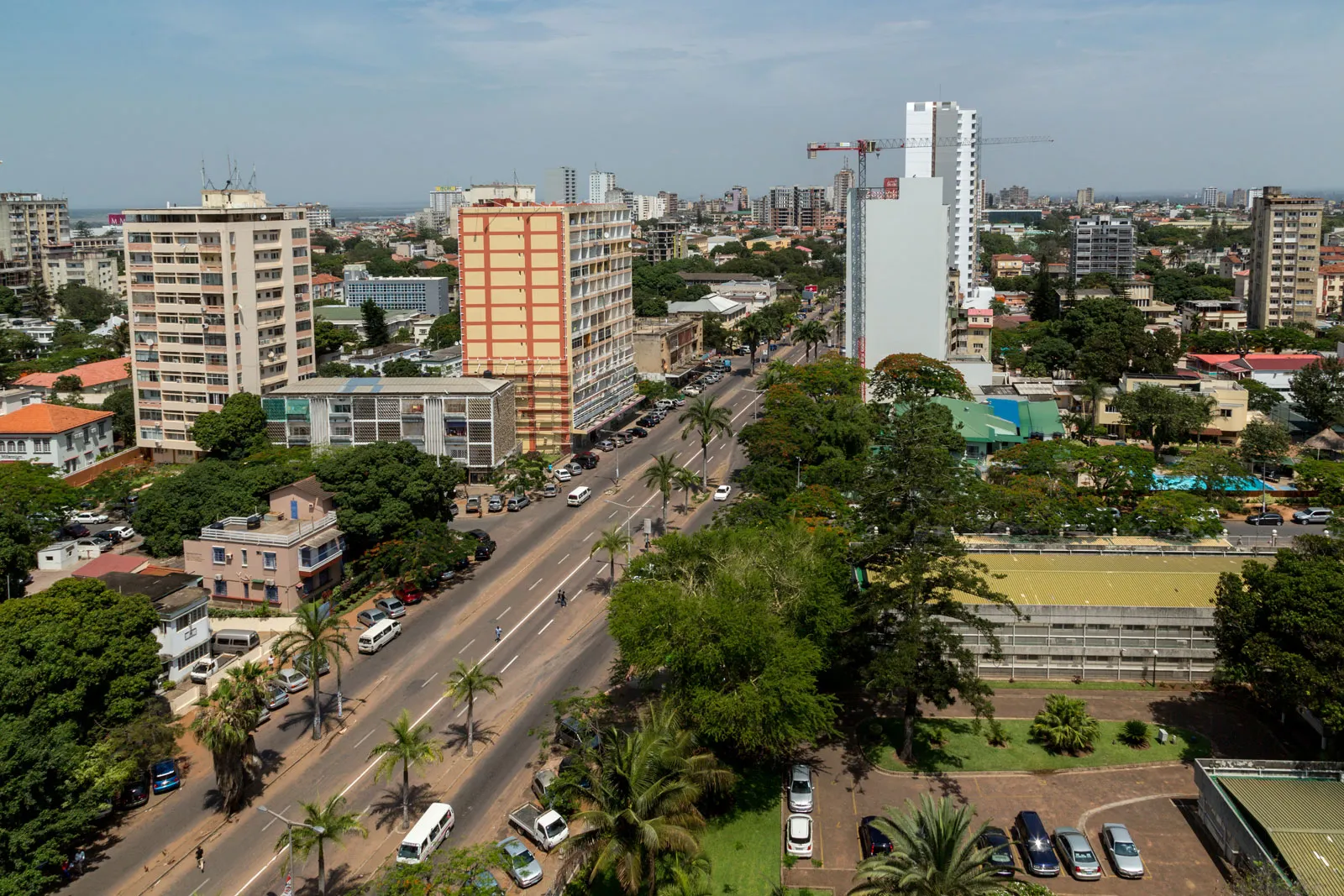
| Mozambique borders Tanzania, Malawi, Zambia, Zimbabwe, South Africa, and Eswatini. Its long Indian Ocean coastline of 2,700 kilometres faces east of Madagascar. About two-thirds of its estimated 33 million people (2022) live and work in rural areas. The country has ample resources, including arable land, abundant water sources, energy, mineral resources, and newly discovered natural gas deposits off its coast. The country has three deep seaports and a relatively large potential pool of labour. It is also strategically located: four of the six countries it borders are landlocked, hence dependent on Mozambique as a gateway to global markets. Mozambique’s strong ties to the region’s economic engine, South Africa, underscore the importance of its economic, political, and social development to the stability and growth of Southern Africa as a whole. |
| Political Context The Front for the Liberation of Mozambique (FRELIMO) and the Mozambican National Resistance (RENAMO) are Mozambique's main political parties, with the Mozambique Democratic Movement (MDM) trailing. Since gaining independence from Portugal in 1975 and adopting multiparty democracy in 1992, FRELIMO has maintained control. In the 2019 elections, they achieved a landslide victory, obtaining a two-thirds assembly majority and winning the inaugural provincial elections, enabling them to appoint governors across all ten provinces. |
| Mozambique held presidential, legislative and provincial elections on October 9, 2024. The presidential race includes four contenders: Daniel Chapo of the ruling party FRELIMO, Ossufo Momade of the opposition party RENAMO, Lutero Simango of the country’s third political party, MDM, and Venâncio Mondlane, an independent candidate backed by the extra-parliamentarian party Optimistic People for the Development of Mozambique (PODEMOS). In October 2023, Mozambique held municipal elections across 65 municipalities. FRELIMO won in 60 municipalities, RENAMO won in four, and MDM in one. Due to irregularities, the votes were repeated or recounted in some areas. The final election results upheld FRELIMO’s victory in Maputo, Mozambique's capital city, and Matola, Mozambique’s largest city. |
| Cabo Delgado conflict. Mozambique’s gas-rich northernmost province of Cabo Delgado has experienced a spike in insurgent attacks since mid-December 2023, the most significant of which was a siege on the town of Macomia in May 2024. These events mark the latest developments in a 7-year conflict which has exacted a high toll in terms of lives, livelihoods, physical infrastructure, as well as human and social capital. The conflict also temporarily stalled progress in key LNG investments in Cabo Delgado. The surge in hostilities came as the SADC Mission in Mozambique withdrew its troops due to the closing of its mandate in July 2024, while Rwanda announced it would boost its troop numbers on the ground to help bridge the gap. The 7-year conflict has resulted in 5,785 fatalities to date. As of July 2024, the total number of displaced stands at over half a million people, while 610,732 have returned to their places of origin. To address this crisis and its impacts, the government is leading reconstruction efforts in the north to help improve alignment and collaboration between development actors, with a focus on prevention, recovery, peacebuilding, and resilience. Work has begun to rehabilitate destroyed districts in the north of the province under the government’s Plano de Reconstrução de Cabo Delgado, while authorities have also approved the Programa de Resiliência e Desenvolvimento Integrado do Norte de Moçambique, a recovery, development, and peacebuilding plan for the three northern provinces of Niassa, Cabo Delgado, and Nampula. |
| Challenges related to civic voice remain. The 2023 CIVICUS Monitor Report downgraded Mozambique's civic space from “obstructed” to "repressed," while the 2024 Freedom House report deems its expression "Partially Free." The Economist Intelligence Unit 2023 Democracy Index considers Mozambique’s governance “authoritarian” based on various democratic indicators. |
| Economic Outlook The economic recovery gained momentum in 2023, and the economy is expected to grow by 4% per year in 2024-2026. Growth has been driven by the extractive sector, mainly liquefied natural gas (LNG) production at the Coral South offshore facility, and the service sector. Agriculture, the main source of employment in the economy, has not regained its pre-COVID dynamism. |
| Inflation moderated significantly, from 10.3% in 2022 to 3.6% in the first half of 2024 (year-on-year), due to easing global oil and food prices and a tighter monetary policy stance. The total level of public debt has declined in recent years and is deemed sustainable in a forward-looking sense. |
| Although the economic outlook is broadly positive, it is subject to considerable uncertainty, with risks tilted to the downside. Delays in the larger LNG projects under construction could undermine growth prospects. Other risks stem from the large wage bill, climate shocks, increasing domestic debt costs, and uncertainty around the security situation in the north. |
| The national poverty rate surged from 48.4% to 62.8% between 2014/15 and 2019/20. The number of poor increased from 13.1 to 18.9 million, partly reflecting the impact of COVID-19 on families. There has been a disproportionate increase in poverty in urban areas. This can be explained by the fact that, while there has been a generalized contraction in consumption, urban areas appear to have been disproportionately impacted by the global pandemic due to the heavier impacts of reduced mobility and slower economic activity. |
| With regards to inequality, the Gini Coefficient (which measures inequality on a scale from 0 to 1, where higher values indicate higher inequality) fell from 56.1 to 50.4 between 2014/15 and 2019/20. Multidimensional poverty has also worsened. The share of households experiencing deprivation rose from 71% to 78.3% between 2014/15 and 2019/20. In rural areas, conditions went back to the levels observed in 2002/03, with over 95% of households falling into multidimensional poverty. Urban households also saw a sharp increase in multidimensional poverty, from 32% to 46% during the same period. |
| Development Challenges Mozambique experienced strong economic growth before 2016, with an average growth rate exceeding 7% between 2000 and 2015. However, multiple shocks between 2016 and 2021—including the hidden debt crisis, cyclones, COVID-19, and conflict in northern Mozambique—have severely impacted economic activity and reversed poverty reduction. |
| The economy remains heavily reliant on natural resources, with extractive industries driving growth. Agriculture, which employs over 72% of the population, suffers from low productivity and high vulnerability to climate shocks, contributing to high and entrenched rural poverty. Frequent natural disasters undermine economic activity and food security, exacerbating poverty, which was projected at 74.7% in 2023 when measured according to the $2.15-a-day poverty line criterion. |
| High underemployment and inequality are significant barriers to economic inclusion, while the informal sector, which encompasses over 80% of the labour force, dominates the labour market, leaving many workers without social protection. With a human capital index of 0.36, the extremely low levels of human capital constitute a structural constraint to rapid, inclusive, and sustainable growth. The scarcity of sound training and the insufficient channels between supply and demand lead to a weak labour market and low productivity growth. Disempowerment among girls and women hinders growth through unfavourable fertility levels, high child and maternal mortality, low levels of skills among women, and poor productivity of women in the labour market. |
| Basic services in education and health are unevenly delivered across the country, driving spatial inequalities. The mechanisms set up to protect the most vulnerable from the impacts of shocks are limited, thus leading to fragility, instability, and violence. |
| Despite recent fiscal consolidation efforts, fiscal pressures remain elevated. The wage bill and debt-service costs amounted to nearly 90% of tax revenues in 2021-2023, limiting resources for non-salary spending on education, health, social protection, and other vital services. This hampers medium-term growth prospects and poverty reduction. Additional financing constraints include a high risk of public debt distress, the lack of access to international capital markets, and a shallow domestic market. |
| A more resilient and inclusive economic model is essential to create jobs, reduce poverty, and manage vulnerabilities to shocks. Reducing wage bill pressures, enhancing spending efficiency, and improving debt management are crucial for fiscal sustainability. In parallel, managing future LNG revenue streams effectively, improving access to finance, investing in education, closing infrastructure gaps, and addressing regulatory challenges are critical for job creation, structural transformation, and reducing fragility. |
| The World Bank Group's engagement in the country is defined under the Mozambique Country Partnership Framework (CPF) FY23-27, endorsed by the World Bank Group’s Board in February 2023. The overarching goal of the CPF is to support Mozambique’s progress toward greener, more resilient, and inclusive development. This will be achieved by setting the foundations for a transition to (i) an economic growth model that generates more and better jobs, with attention to women’s participation; (ii) more equitable institutions and a society that is more resilient to multidimensional shocks; (iii) a future development path that is consistent with global climate goals. WBG support will help address the underlying causes of fragility, conflict, and violence. The CPF program emphasizes the importance of scaling up for impact, leading to fewer, larger transformational investments and paying greater attention to implementation. As of October 31, 2024, the World Bank portfolio for Mozambique consists of 42 regional and national projects, with a total commitment of $7.1 billion (credits and grants). |
| As part of its analytical work, the World Bank issued the Mozambique Country Climate and Development Report (CCDR), which underscores the urgency of mainstreaming climate action into Mozambique’s planning, given the country’s vulnerability to the effects of climate change. |
| World Bank-supported projects in Mozambique have significantly impacted several sectors over the years such as education, health, social protection, energy, agriculture, governance, and others. Although challenges persist, some important results include: |
| Education The World Bank-supported Improving Learning and Empowering Girls in Mozambique project has helped train 8,367 teachers, provided school grants for over 7.2 million students, distributed 8.2 million textbooks for grades 1-3, and supported over 2 million students with performance-based grants to improve education outcomes like girls' retention, teacher attendance, and transparent grant management. Additionally, through the Improvement of Skills Development Project, Mozambique increased higher education enrollment from 20,000 in 2018 to 52,400 in 2024, improved Technical and Vocational Education and Training (TVET) programs for 43% of students, certified 2,619 TVET trainers, trained 408 higher education faculty in STEM, and supported 40 Ph.D. scholars. |
| Health Access to reproductive, maternal, newborn, child, and adolescent health and nutrition services improved in underserved areas between 2018 and 2023, with support from the Primary Health Care Strengthening Program. These improvements included better quality services and upgrades to district hospitals and health centres, measured by performance scorecards. During this time, the number of maternal and child health nurses in primary care grew from 12,205 to 17,153. Access to health services in communities also expanded significantly, reaching two million households by 2022, compared to just 240,000 in 2018. This expansion was made possible by training large numbers of community health workers, who also implemented nutrition programs in the eight provinces with high levels of stunting. Furthermore, with support from the World Bank and its partners, at least 37 out of 42 underdeveloped districts in Mozambique saw an increase in the number of babies delivered in healthcare facilities, reaching 85%. Additionally, family planning coverage improved significantly, increasing the number of couples covered from 2.1 million to 3.5 million. |
| Social Protection Social protection transfers expanded digital payments to 20% of the beneficiaries between 2020 and 2024 and plan to further expand to 80% by 2027, increasing accountability, transparency, and financial inclusion of the poor and vulnerable. The Social Protection for Economic Resilience Project helped to assist 229,700 beneficiaries through digital and semi-digital payments, launched during the COVID-19 emergency. Digital transfers also support the preparedness of the social protection system to respond to emergencies due to climate change, displacement, and others. Despite initial delays in the adoption of this delivery mechanism, its implementation has gradually improved. |
| Gender From December 2023 to October 2024 more than 250,000 girls have been receiving financial and social support to stay in school through the East Africa Girls’ Empowerment and Resilience Regional Project. These efforts build on the work underway with the "Eu Sou Capaz" Project, with support from the Harnessing the Demographic Dividend Project, which provides incentives like school uniforms and bicycles to help girls stay in school. The program also helps girls who are out of school by providing life-skills training, as well as mentoring in community safe spaces for themselves, their families, and community leaders. Schools covered by the program have seen a decreasing trend of school dropout rates since 2022 in Grades 5, 6, and 7. Since the program started in 2021, these schools have also seen an increase in the Gender Parity Index – measuring the relative access to education of males and females – from 0.82 in 2021 to 0.90 in 2024 due to an increase in girls’ enrolment and school attendance. The program intended to assist 300,000 girls, but it has already surpassed this goal, assisting nearly half a million girls in the selected districts. |
| Energy Mozambique's national electrification program, “Programa Nacional de Energia para Todos,” is one of Africa's most rapid, with access rates jumping from 31% in 2018 to 53% in 2023. The recently completed Mozambique Energy for All Project, along with the ongoing Sustainable Energy and Broadband Access in Rural Mozambique Project, have significantly contributed to expanding electricity access. To date, these projects have enabled over 2.6 million Mozambicans to connect to the national grid. |
| Governance and Civil Registration The World Bank’s Digital Governance and Economy Project (EDGE) and its ID4D Initiative supported Mozambique in deploying a free-ID pilot campaign in three provinces. Overwhelming demand led the government to spearhead, in November 2023, a nationwide free ID campaign for all new ID registration for the first time in the country’s history. With support from EDGE, at least 140,000 IDs were delivered within a few months, free of charge in Mozambique. DNIC is now scaling up its effort to ease access to free IDs nationwide. |
| Agriculture Over the past six years, the Sustainable Rural Economy Program and the Smallholder Irrigated Agriculture and Market Access Project have supported Mozambique’s agriculture sector. More than 270,000 smallholder farmers increased their agricultural productivity and integrated into markets. Additionally, over 100,000 hectares were established employing climate-resilient agriculture practices, and more than 1,440 hectares were developed and are currently in use for irrigation. |
| Crisis and Recovery As part of the Northern Crisis Recovery Project, 79 Community-Based Organizations and 55 peace-building committees were established. As of August 2024, more than 40,263 trauma survivors received assistance, 13 Child Protection Committees are functioning across relocation sites, and referral pathways for gender-based violence and sexual exploitation and abuse incidents have been established. School-based psychosocial support is available at 20 schools, with over 40,263 trauma survivors assisted. 68,962 farmers received support and internally displaced people received 52 fishing boats in coastal areas. The project also helped to deliver 123 resilient public infrastructures, including health centres, schools, and water systems, creating over 3,000 jobs for displaced people and hosting community members during the execution of works contracts. Initiatives under the project also included the civil registration of 47,500 internally displaced persons in southern Cabo Delgado, with 31,190 receiving identity cards, and 108,186 people registered in the northern part of the province. |
| For the full document click the link below: |
| The World Bank Partnership With Mozambique Aims To Support The Country’s Progress Toward Greener, More Resilient, And Inclusive Development. |
| Stay ahead of the curve! Subscribe to InsidEntity for daily updates on all your favourite companies. |