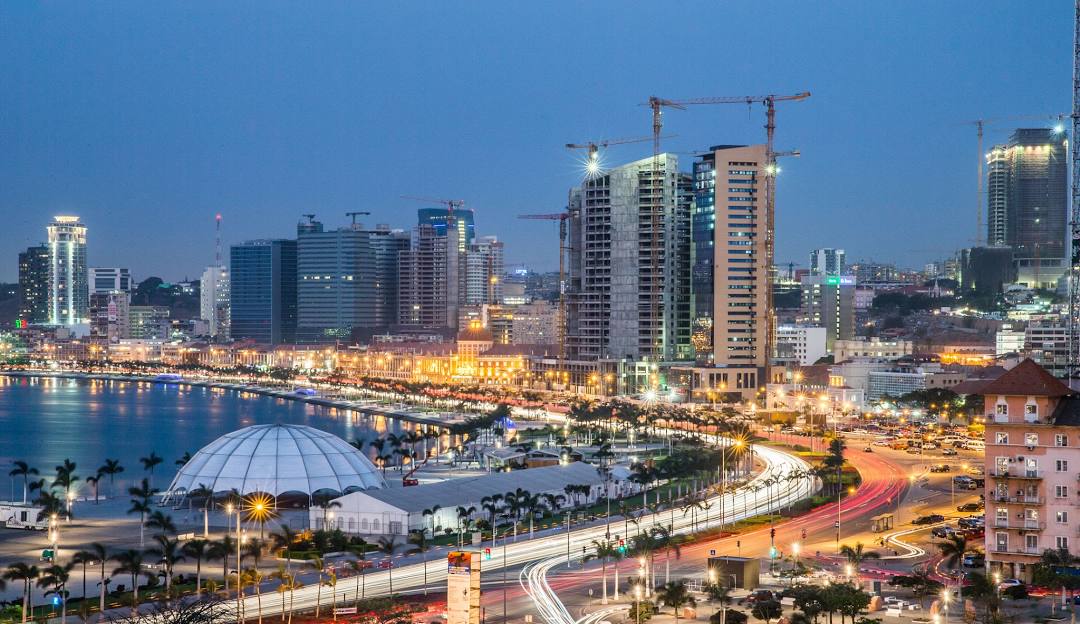
| Recent macroeconomic and financial developments: Angola is one of the most oil-dependent African countries, with oil accounting for 28.9% of GDP and 95% of exports. Oil also affects growth indirectly in non-oil sectors. GDP grew an estimated 0.9% in 2023, much lower than the 3.5% projected at the beginning of the year and the 3% growth in 2022. The first half of 2023 was marked by falling oil production and prices, higher external debt amortizations as the debt service moratorium ended, and a 60% currency devaluation. Driven mostly by the devaluation and the high share of dollar-denominated debt, the public debt-to-GDP ratio rose to 84% at the end of 2023 after falling to 69.2% in 2022. On the positive side, the debt service ratio to total income declined from 279% in 2022 to 100% in 2023, reflecting the efficacy of the authorities’ strategy to reduce financing costs. Inflation dropped from 21.7% in 2022 to 13.6% in 2023, with food prices accounting for 68.8% of the national consumer price index. The National Bank of Angola raised the basic interest rate to 18% in November 2023 and 19% in March 2024, increasing the reserve requirement ratio in the national currency. The decline in imports compensated for the 28% drop in exports in 2023, leaving international reserves unchanged at the end of 2023 ($14.7 billion) from the end of 2022 ($14.6 billion), equivalent to 7.5 months of import cover. Angola was ranked 148 of 191 countries on the Human Development Index in 2021, and the official monetary poverty rate was 40.6% in 2019. Most jobs in Angola are informal (79.9%), and the unemployment rate is high (29.6%), driven by rural areas (38%) and youth (52.9%). |
| Outlook and risks: The short-term outlook has deteriorated. Inflation is expected to peak at 18.1% in 2024 and then drop to 12.4% in 2025, driven largely by the currency devaluation in 2023. The basic interest rate was raised to 19% in March 2024. The government manages this shock by tightening fiscal policy (the 2024 budget considers lower oil production and prices) and taking fiscal consolidation measures (including reducing fuel subsidies), showing enhanced resilience. After debt repayments of $18 billion in 2023 and $14 billion in 2024, the debt repayment profile is projected to decline going forward, opening up more fiscal space. The International Monetary Fund shares this positive perspective on Angola’s risks, projecting a 14 percentage point decline in the debt-to-GDP ratio in 2024, from 84% to 70%, in its March 2024 Country Report. |
| Reform of the global financial architecture: Economic diversification remains elusive as oil production declines and global decarbonization looms in the medium term. The agriculture sector has grown faster than the economy for four consecutive years, and several indigenous private sector companies have diversified their portfolio from oil services and construction into agro-processing. However, structural transformation must be accelerated and consolidated, and several sectors still need to be opened to foreign direct investment. The government has identified agribusiness and agriculture as the drivers of industrialization and job creation over the next five years. Additional support will come from investment in infrastructure, especially through integrated development corridors such as the Lobito corridor, the first public-private partnership in the country. The government has a stated policy of longer-term borrowing from multilateral institutions to fund its development expenditures. It has progressively substituted more expensive resource-backed loans and prefers issuing longer-term debt instruments to smooth out repayment peaks. Under the country’s decarbonization agenda, the energy system received the largest share of climate finance, at 69%. Cross-sectors followed, with 19%, while agriculture, forestry, other land use, and fisheries together received 11%. Public finance sources account for the majority of climate finance in Angola, at 88%. Development finance institutions hold the largest share among these finance sources, at 44%, and the private sector accounts for 17% |
| For the full document click the link below: Angola Economic Outlook and GDP |